Mon – Sun: 11:00 AM – 8:00 PM
Imagine never booking a waxing appointment again. No razor burns the day before an event. No ingrown hairs, no last-minute panic. Just smooth, hair-free skin, every single day, without thinking about it.
Laser hair removal at Refine Skin Clinic gives you exactly that. Performed under the direct supervision of Dr. Hansa Srivastava, MD Dermatologist, with technology specifically calibrated for Indian skin tones, not repurposed from protocols built for lighter skin.
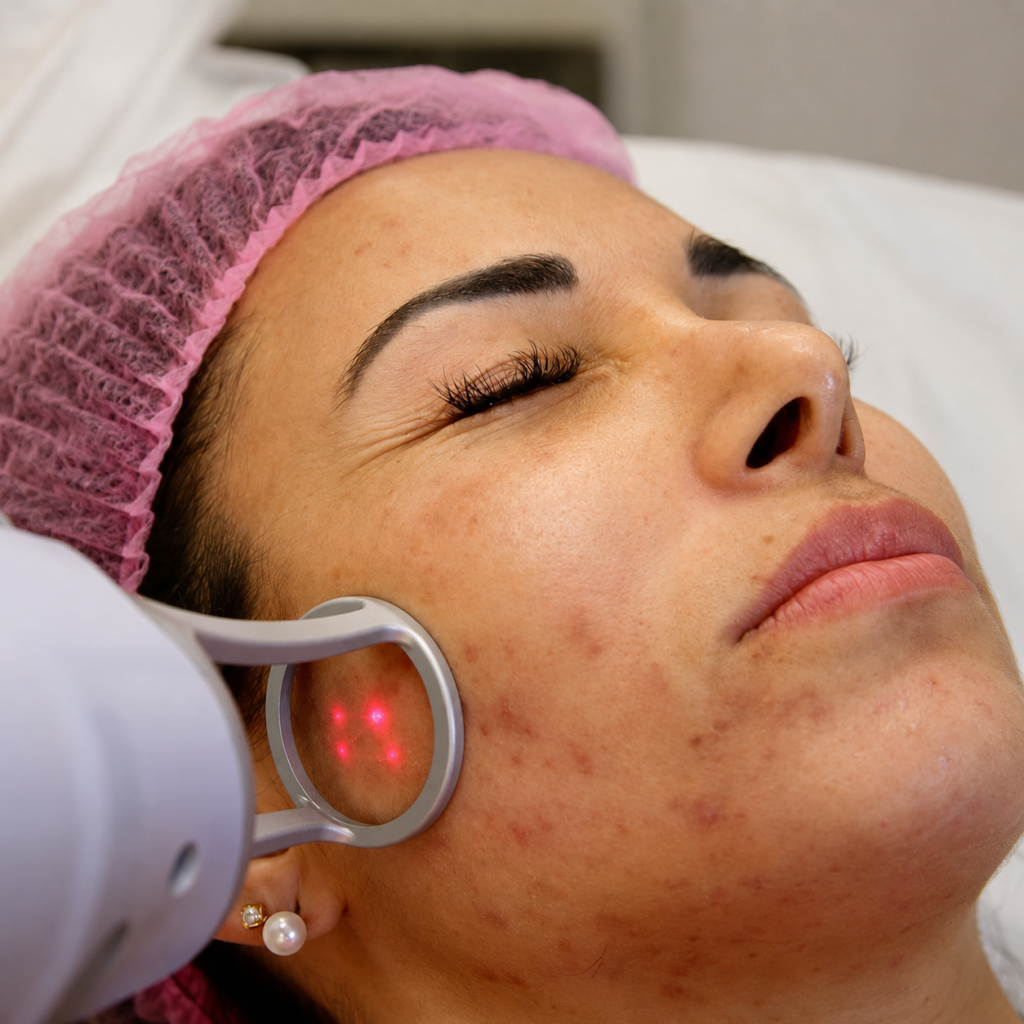
Laser hair removal uses concentrated light energy to target the melanin, the natural pigment, inside your hair follicles. The heat generated by this light destroys the follicle at its root, preventing future hair growth while leaving the surrounding skin completely untouched.
The result is permanent hair reduction, typically 80 to 90%, after a complete course of sessions. Any hair that regrows after treatment tends to be significantly finer and lighter than before.
The critical factor here is calibration. Laser settings, wavelength, pulse duration, and energy level, must be individually adjusted based on your skin tone, hair colour, and hair density. This is especially important for Indian skin, which has higher melanin than lighter skin types. Dr. Hansa's specific training in laser treatments for Indian skin makes this the difference between a safe, effective result and a damaging one.
Not a technician or beauty therapist. Dr. Hansa personally supervises every LHR procedure.
Lasers are chosen and calibrated specifically for Fitzpatrick III–V skin, eliminating the risk of burns or post-treatment pigmentation.
The face, underarms, legs, and bikini line each have different hair density and skin sensitivity. Treatment settings are adjusted accordingly.
Most patients return to their regular activities the same day.
You'll know exactly how many sessions to expect before you commit to anything.
Most patients at Refine Skin Clinic achieve 80–90% permanent hair reduction in 6 to 8 sessions, spaced 4 to 6 weeks apart. The exact number depends on your hair colour, density, the body area being treated, and any hormonal factors in play.
Darker, coarser hair generally responds faster. Hormonal conditions such as PCOD may require a couple of additional sessions. Dr. Hansa will give you a realistic, honest estimate during your consultation, not the lowest possible number just to get you started.
<p>Most patients describe the sensation as a mild warmth or a rubber-band snap. Numbing cream is applied 30-45 minutes before each session to ensure comfort throughout.</p>
<p>Yes, though the bikini area may feel slightly more sensitive during your cycle. For all other body areas, your period has no impact on the treatment at all.</p>
<p>Shave the treatment area 24 hours before your session. Avoid waxing, threading, or plucking for at least 4 weeks prior. Come with clean, product-free skin, and avoid direct sun exposure or tanning for 2 weeks beforehand.</p>
<p>Avoid direct sun exposure for 48 hours. Apply the prescribed soothing gel and a broad-spectrum SPF50 sunscreen. Avoid hot showers, saunas, and swimming pools for 24-48 hours post-session. You may notice what looks like hair growing in the first 1-2 weeks, this is the treated follicle shedding, not new growth.</p>
<p>The clinical term is 'permanent hair reduction', meaning 80-90% of treated follicles are permanently destroyed. Some fine hairs may remain or regrow over years, particularly with hormonal changes. Occasional maintenance sessions once every 1-2 years address these minimal regrowths.</p>
The best injectable treatments are never the ones people can spot, they're the ones that make you look like a more rested, refreshed version of yourself. That's the standard Dr. Hansa Srivastava holds herself to with every single injectable treatment she performs.
As a Certified Master Injector with a Fellowship in Injectables and Lasers from DIAS Mumbai, Dr. Hansa brings together precise anatomical knowledge and an aesthetic eye for facial balance. The result is never 'done.' It's simply you, feeling better.
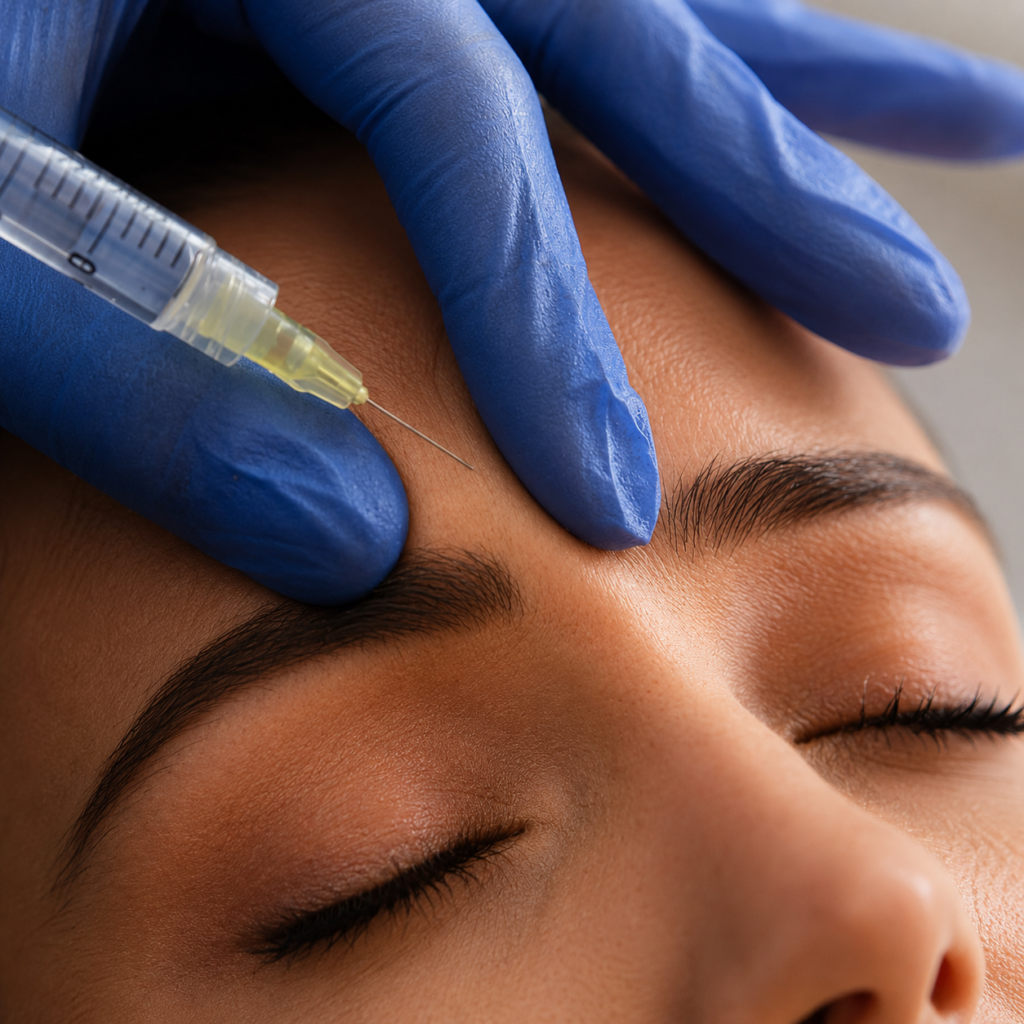
Botox (Botulinum Toxin Type A) works by temporarily relaxing the specific facial muscles responsible for dynamic wrinkles, the lines that form when you frown, squint, raise your eyebrows, or smile over time. When correctly placed and precisely dosed, it smooths these lines completely while leaving your full range of natural expressions entirely intact.
Botox results appear gradually over 3-7 days and last approximately 4-6 months. With regular treatments over time, many patients find they need top-up sessions less frequently as the treated muscles naturally weaken with reduced use.
Injectables are only as effective and safe as the medical expertise behind them. Incorrect product placement or poor dosing can lead to asymmetry, prolonged bruising, or filler migration.
Dr. Hansa's FIAL Fellowship from DIAS Mumbai and MD Dermatology background mean every injectable treatment is approached with clinical understanding that goes beyond standard aesthetics training.
She knows what's safe, what's achievable, and what's appropriate for your specific face, and will always be honest when something isn't right for you.
Dermal fillers use hyaluronic acid, a molecule that exists naturally in your own skin, to restore lost volume, sharpen facial contours, and smooth deeper folds. Unlike Botox, which relaxes muscles, fillers physically fill and sculpt.
Dr. Hansa uses only premium, CE-certified hyaluronic acid fillers. Results are visible immediately, and effects typically last between 9 and 18 months depending on the area and the amount placed. Fillers can address nasolabial folds, marionette lines, lip enhancement, cheek augmentation, tear trough hollowing, jawline definition, and chin projection.
<p>Yes. Botox has one of the longest and most documented safety profiles of any aesthetic treatment, over 30 years of clinical use in both medical and cosmetic applications. Mild side effects such as slight bruising or temporary headache are uncommon. Serious complications are exceedingly rare when performed by a qualified medical professional.</p>
<p>Only if performed incorrectly. A frozen appearance results from over-injection or poor placement. Dr. Hansa uses conservative dosing and anatomically precise placement to achieve smoothed lines with completely preserved natural movement.</p>
<p>Most hyaluronic acid fillers last 9 to 18 months. Lip fillers tend to metabolise faster, typically 6 to 12 months. Deeper structural fillers placed in the cheeks or jawline often last 12 to 18 months or longer.</p>
<p>Yes. This is one of the significant advantages of hyaluronic acid fillers over permanent alternatives, they can be fully dissolved using an enzyme called hyaluronidase, which safely and quickly breaks down the filler material.</p>
PRP isn't a new trend that appeared on social media last year. It's a treatment with decades of rigorous clinical evidence behind it, first used in surgical recovery and orthopaedic medicine, now established as one of the most powerful tools in dermatology for both hair restoration and skin rejuvenation.
At Refine Skin Clinic, PRP is used both as a standalone treatment and as part of combination protocols, carefully designed to amplify results for hair fall, skin texture improvement, and early ageing.
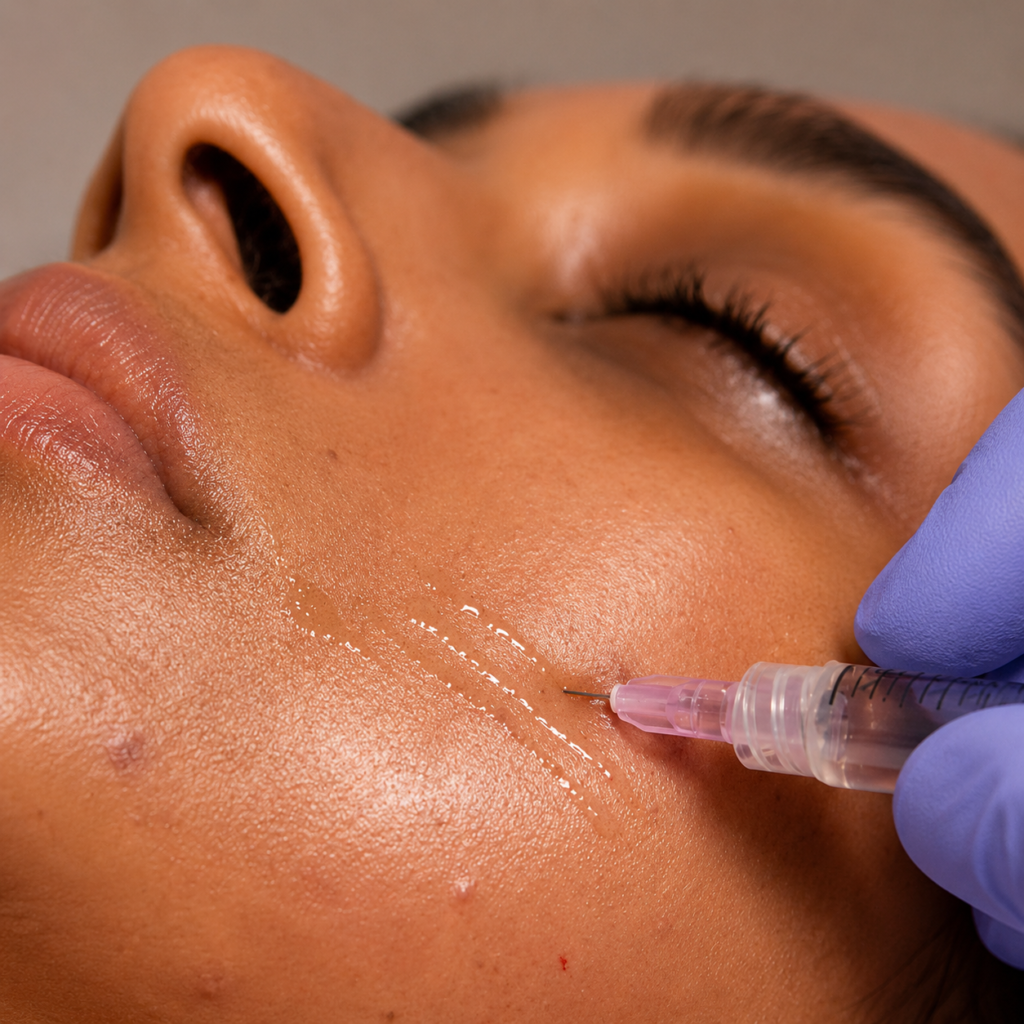
PRP stands for Platelet-Rich Plasma. Platelets are the component of your blood that drives clotting and tissue healing. They contain a high concentration of growth factors, proteins that signal your body to repair, regenerate, and build new tissue.
The PRP procedure involves three straightforward steps: a small amount of blood is drawn from your arm, it's processed in a centrifuge to separate and concentrate the platelets, and the resulting PRP is then precisely injected into the target area, the scalp for hair restoration, or the skin for rejuvenation.
In the scalp, PRP growth factors stimulate dormant hair follicles, increase local blood supply, and trigger follicles from their resting phase back into active growth. In the skin, they stimulate collagen and elastin production, improve hydration, and accelerate cellular renewal.
Genetic pattern hair loss in both men and women.
Diffuse shedding following stress, illness, or post-pregnancy.
Before significant follicle miniaturisation has occurred.
When PRP is applied to the skin, most commonly in combination with microneedling, it creates a powerful skin rejuvenation effect. The growth factors penetrate the dermis and trigger a cascade of natural collagen and elastin production, resulting in measurably improved skin quality.
A standard PRP hair protocol at Refine Skin Clinic involves 6 sessions spaced 2-3 weeks apart, followed by quarterly maintenance. Most patients notice a meaningful reduction in daily shedding within 4-6 weeks, and visible new regrowth typically appears by 3-4 months.
<p>A topical numbing cream is applied 30-45 minutes before the procedure, making the treatment very comfortable. Most patients describe a mild pressure or warmth sensation during the injections, nothing that most people find difficult to manage.</p>
<p>For hair: 6 sessions over 3 months, then maintenance every 3-6 months. For skin rejuvenation: 3 sessions spaced 4 weeks apart, with maintenance every 6 months. Individual variation applies based on your specific concern and response.</p>
<p>Yes. Because PRP uses your own blood, there is absolutely no risk of allergic reaction or rejection. It is classified as an autologous treatment, fully biocompatible with your body. Side effects are minimal and limited to mild temporary swelling or redness at the injection sites.</p>