Mon – Sun: 11:00 AM – 8:00 PM

It starts quietly. A little more hair on the pillow in the morning. A slightly wider parting when you style your hair. A handful in the shower that used to be a few loose strands. You tell yourself it's seasonal. Or stress. Or just a phase that will pass.
And then one day you notice yourself angling differently in photographs. Choosing hairstyles designed to conceal rather than express. Carrying a quiet, background anxiety about something that once never crossed your mind.
Hair fall, whether it's gradual diffuse thinning, a receding hairline, or sudden shedding, is not something you just have to live with. It has causes. It has treatments. And at Refine Skin Clinic, it always starts with understanding exactly what's causing yours.
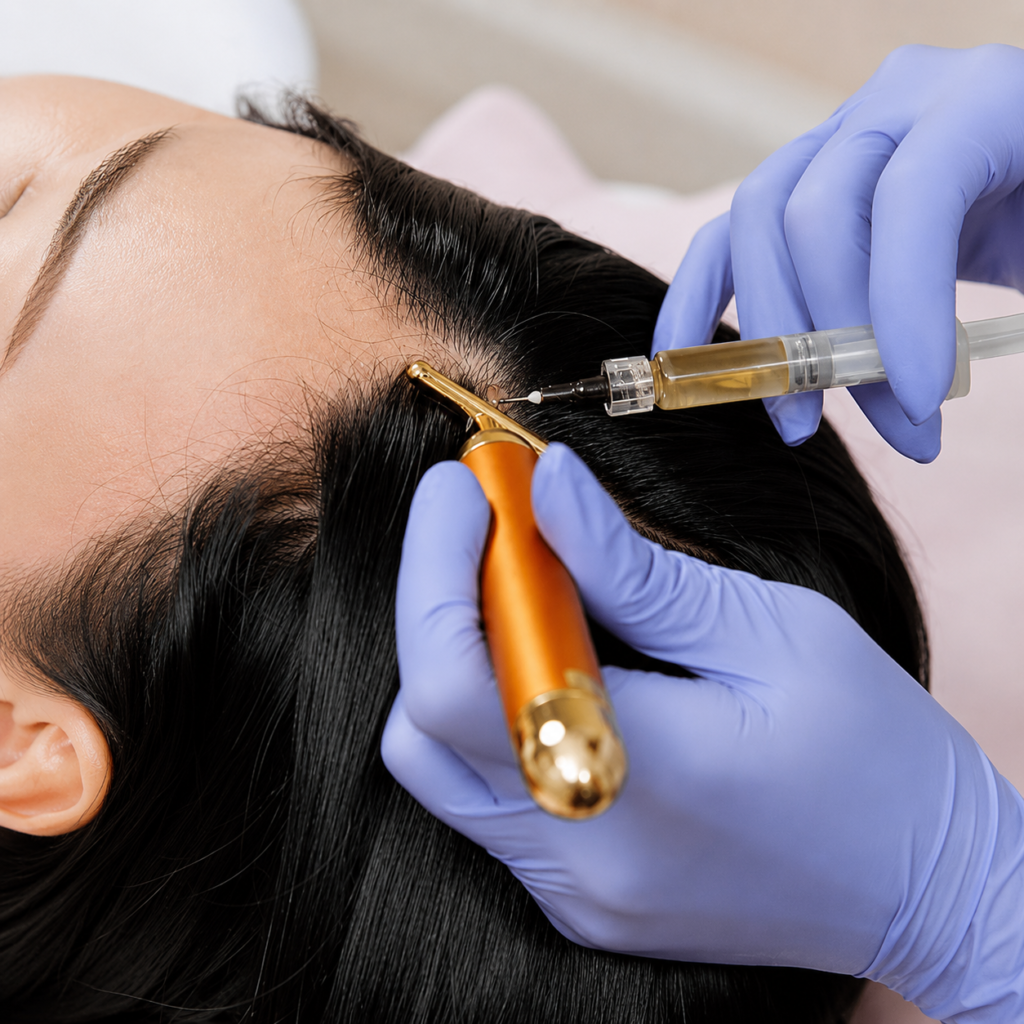
Hair fall is not a single condition, it's a symptom that can come from a dozen different origins. Treating it without first understanding the cause is like trying to fix a water leak by mopping the floor. It gives temporary relief and nothing more.
Dr. Hansa begins every hair fall consultation with a thorough assessment, examining the pattern and distribution of loss, evaluating scalp health, reviewing your hormonal and medical history, and recommending blood investigations where clinically relevant. Only after this assessment does she build your treatment plan.
Genetic pattern hair loss in men (M-shaped temporal recession) and women (diffuse thinning at the crown and parting).
Sudden widespread shedding triggered by stress, prolonged illness, high fever, post-surgical recovery, or post-pregnancy.
Low ferritin, Vitamin D, Vitamin B12, or zinc. Among the most underdiagnosed and undertreated causes of hair fall in Indian patients.
Thyroid dysfunction, PCOD, or oestrogen fluctuations during perimenopause.
Dandruff, seborrhoeic dermatitis, or fungal scalp infections causing secondary hair loss.
Autoimmune-mediated patchy hair loss requiring separate management.
PRP is one of the most evidence-backed, non-surgical treatments for hair loss available in dermatology today. The procedure uses your own blood, a small amount is drawn, processed in a centrifuge to concentrate the platelets, and the resulting platelet-rich plasma is injected into the scalp at the follicle level. The growth factors in PRP stimulate dormant follicles, improve blood supply to the scalp, and reactivate the natural hair growth cycle.
PRP is particularly effective for androgenetic alopecia and early-to-moderate pattern hair loss in both men and women. Most patients notice a reduction in shedding within the first 2-3 sessions, and visible new growth typically appears by sessions 4-6.
<p>Yes, and the evidence is substantial. Multiple peer-reviewed clinical studies have demonstrated PRP's effectiveness in reducing hair fall and stimulating regrowth, particularly in androgenetic alopecia. Results are significantly better when PRP is started before major follicle miniaturisation has occurred, which is why early intervention matters.</p>
<p>A standard PRP protocol involves 6 sessions over approximately 3 months, followed by maintenance sessions every 3-6 months. The exact number can vary based on your degree of hair loss and individual response to treatment.</p>
<p>Absolutely. PRP is equally effective for female hair loss, including post-pregnancy shedding, PCOD-related thinning, and female pattern hair loss. Dr. Hansa has extensive specific experience treating women's hair concerns at Refine Skin Clinic.</p>
<p>Most patients notice reduced daily shedding within 4-8 weeks of starting treatment. Visible new hair growth typically becomes apparent by 3-4 months. Hair regrowth is a naturally slow biological process, consistency with the full treatment plan is essential to achieving the best outcome.</p>