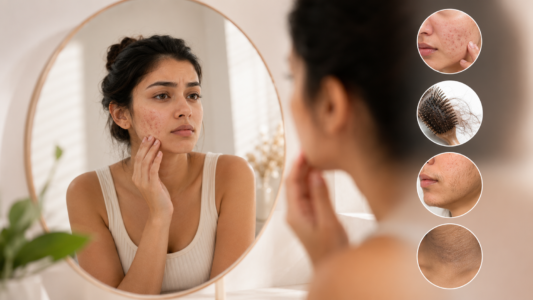
You’re following a skincare routine.
You’re using anti-acne products.
You’ve changed shampoos.
You’ve even tried home remedies.
Yet the acne keeps coming back. Hair fall continues. Facial hair seems to be increasing. Dark pigmentation around the neck refuses to fade.
The reason may not be your skincare products.
It could be your hormones.
Many women first notice the signs of PCOD or PCOS through changes in their skin and hair before they realize there’s an underlying hormonal imbalance. In fact, dermatologists are often among the first healthcare professionals to identify symptoms that suggest these conditions.
Understanding the difference between PCOD and PCOS can help you recognize symptoms early and seek the right treatment before they begin affecting your skin, hair, metabolism, and overall well-being.
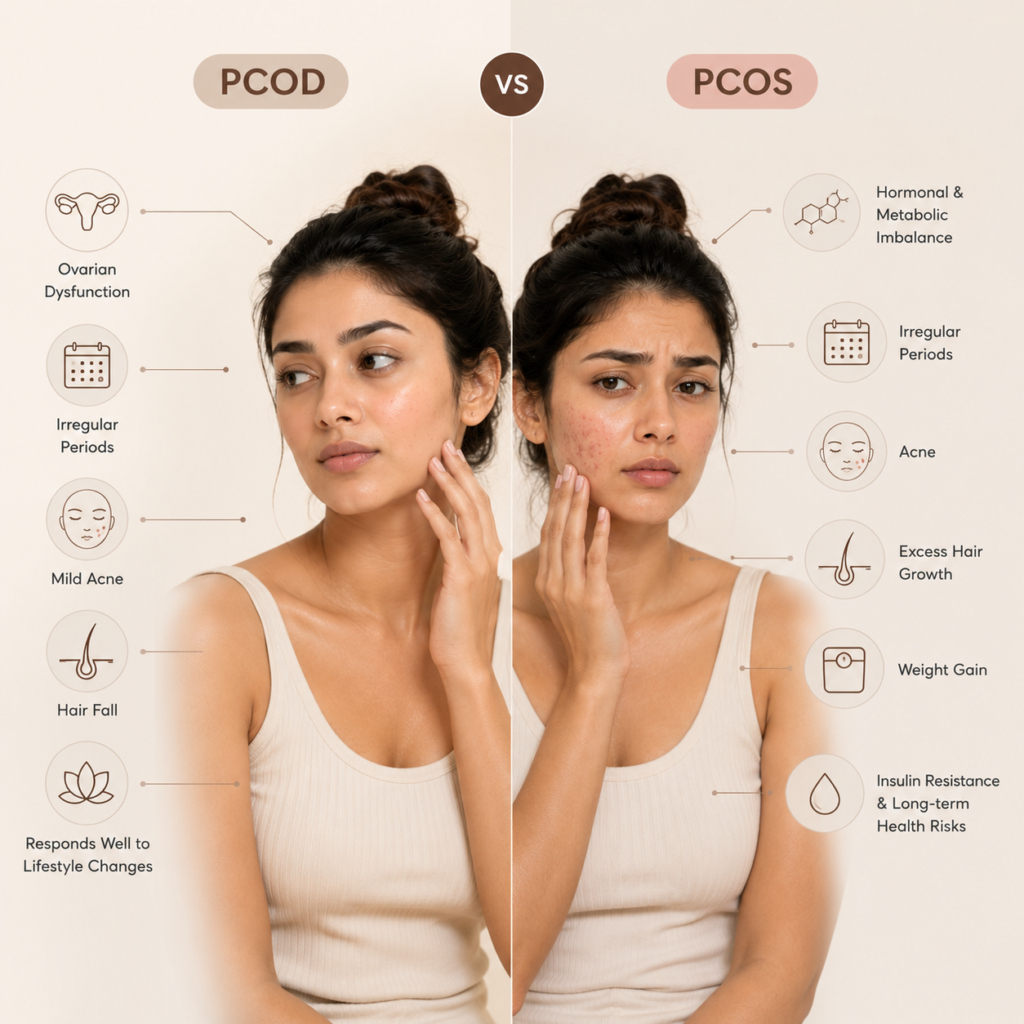
PCOD vs PCOS: Are They the Same?
Many people use the terms interchangeably, but they are not exactly the same.
While both conditions involve hormonal imbalance and ovarian dysfunction, PCOS is generally considered a more complex metabolic and endocrine disorder.
| PCOD | PCOS |
| Polycystic Ovarian Disease | Polycystic Ovary Syndrome |
| Common condition affecting ovarian function | Hormonal and metabolic syndrome |
| Ovaries may produce immature eggs | Hormonal imbalance affects multiple body systems |
| Usually milder | Often more complex |
| May respond well to lifestyle modifications | Often requires long-term management |
Both conditions can cause irregular periods, acne, hair fall, and unwanted facial hair growth.
However, PCOS is more strongly associated with insulin resistance, weight gain, metabolic issues, and long-term health complications.
Why Do PCOD and PCOS Affect the Skin?
The answer lies in hormones.
Women with PCOD or PCOS often have elevated levels of androgens, commonly called “male hormones.”
Higher androgen levels can:
- Increase oil production
- Trigger acne breakouts
- Cause enlarged pores
- Stimulate facial hair growth
- Contribute to scalp hair thinning
- Increase pigmentation in certain areas
These hormonal changes frequently show up on the skin long before other symptoms become obvious.
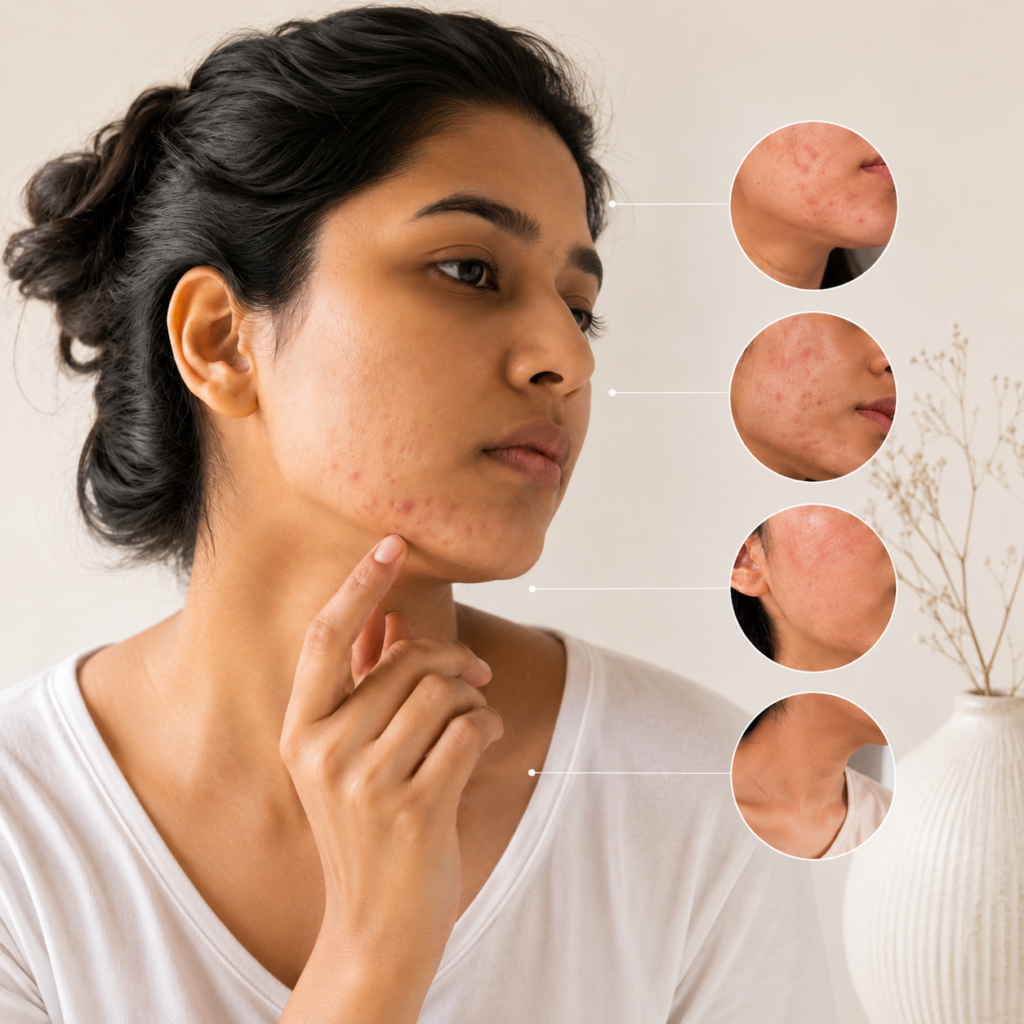
Hormonal Acne: One of the Most Common Signs
Hormonal acne is often one of the earliest dermatological symptoms associated with PCOD and PCOS.
Unlike teenage acne, hormonal acne commonly appears around:
- Jawline
- Chin
- Lower cheeks
- Neck
Characteristics include:
- Painful cystic pimples
- Deep inflammatory lesions
- Frequent recurrence
- Resistance to over-the-counter treatments
Research suggests that acne affects a significant percentage of women with PCOS, making it one of the most visible signs of hormonal imbalance.
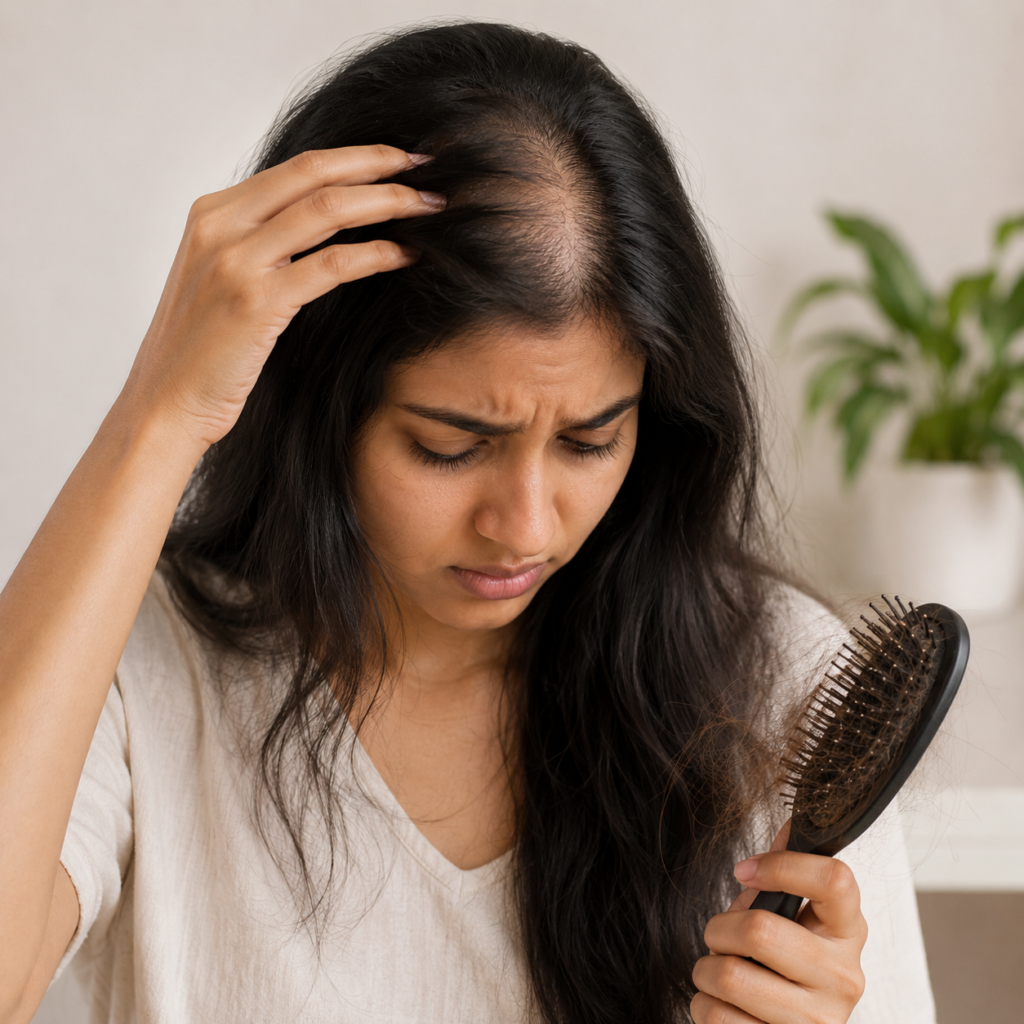
Why Does PCOS Cause Hair Fall?
Hair follicles are highly sensitive to hormonal changes.
When androgen levels increase, hair growth cycles may become disrupted.
This can lead to:
- Increased hair shedding
- Hair thinning
- Reduced hair density
- Widening hair partitions
- Female pattern hair loss
Many women notice that their hair becomes thinner around the crown and top of the scalp rather than experiencing uniform hair loss.
Excess Facial Hair Growth (Hirsutism)
One of the most distressing symptoms for many women is unwanted facial hair growth.
Common areas include:
- Chin
- Upper lip
- Sideburns
- Jawline
- Neck
Studies indicate that hirsutism affects approximately 60–80% of women with PCOS, making it one of the most common clinical signs of androgen excess.
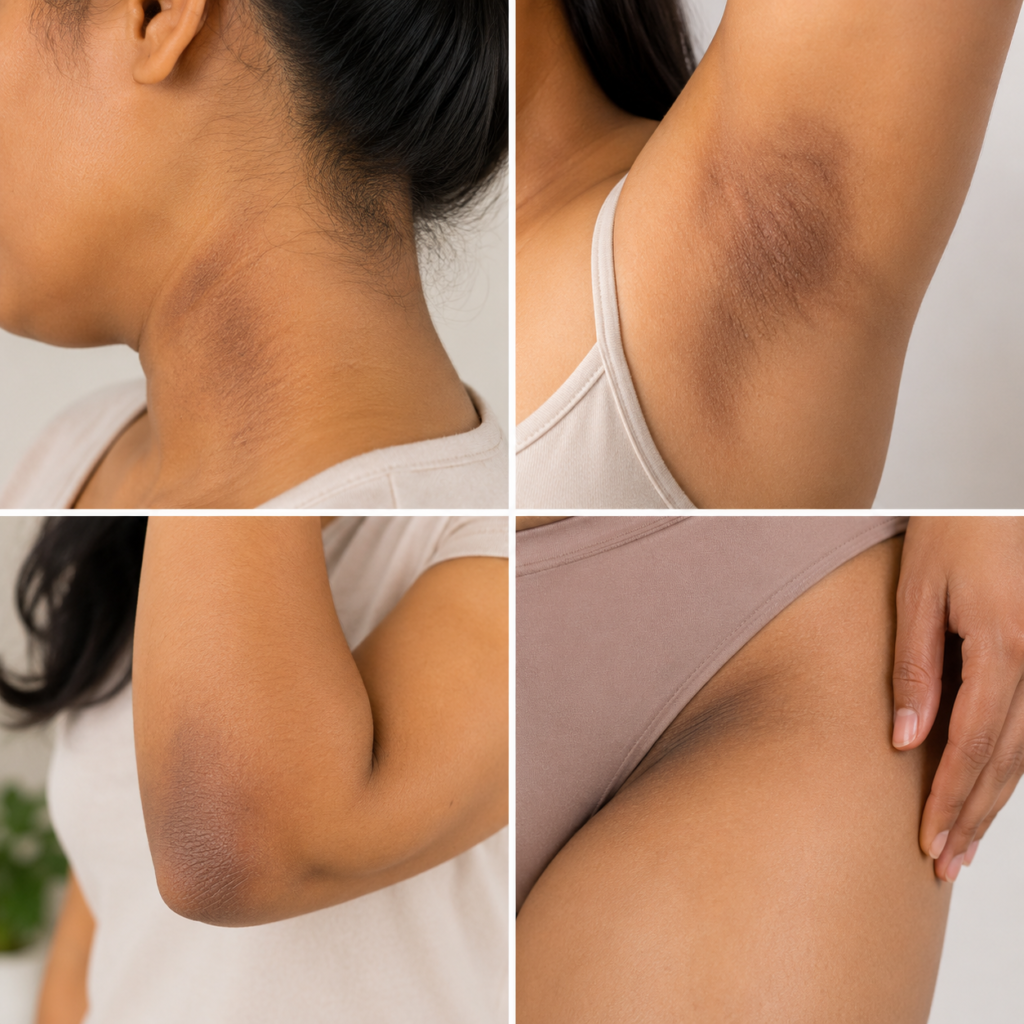
Why Does Pigmentation Develop?
Many women with PCOS develop darkened skin patches around:
- Neck
- Underarms
- Groin
- Elbows
This condition is called Acanthosis Nigricans.
It is often linked to insulin resistance, a common feature of PCOS.
The pigmentation itself is not harmful, but it may indicate an underlying metabolic imbalance that deserves medical attention.
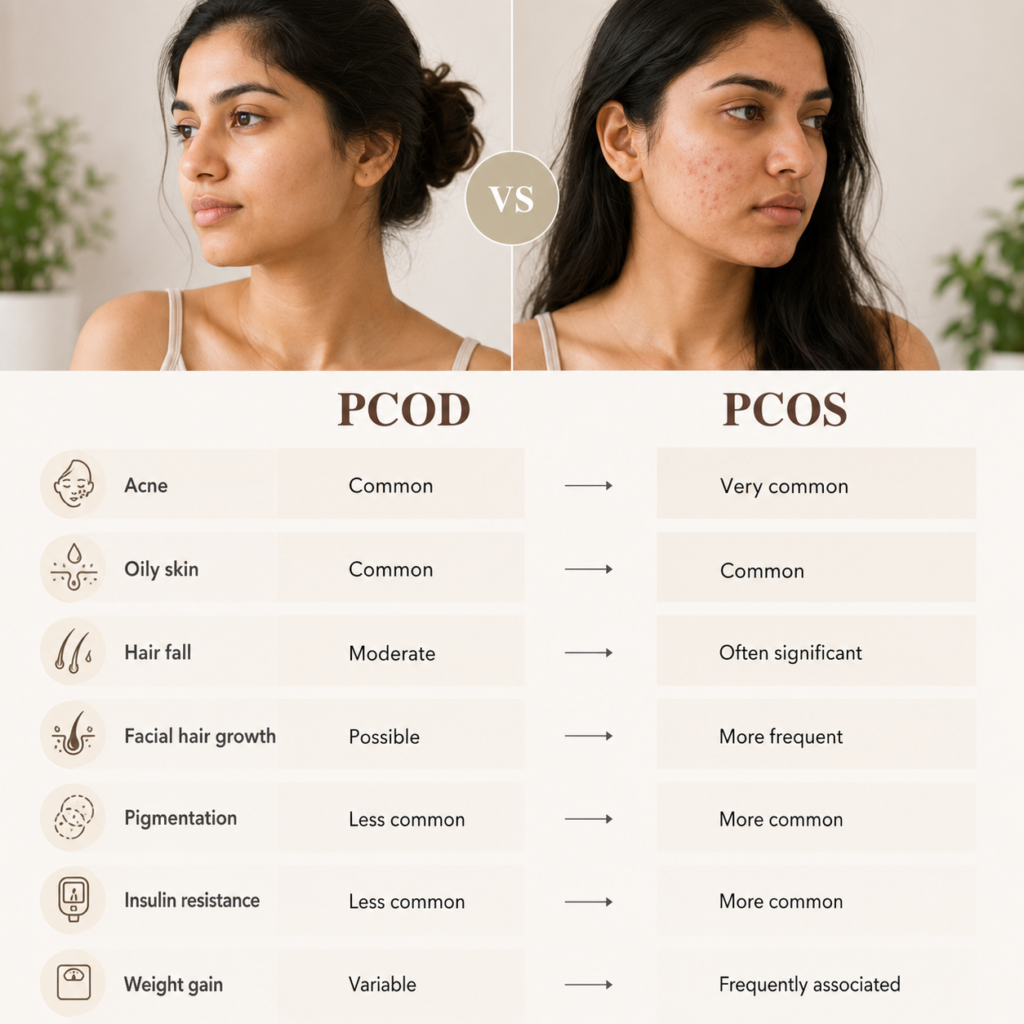
PCOD vs PCOS: Skin and Hair Comparison
| Concern | PCOD | PCOS |
| Acne | Common | Very common |
| Oily skin | Common | Common |
| Hair fall | Moderate | Often significant |
| Facial hair growth | Possible | More frequent |
| Pigmentation | Less common | More common |
| Insulin resistance | Less common | More common |
| Weight gain | Variable | Frequently associated |
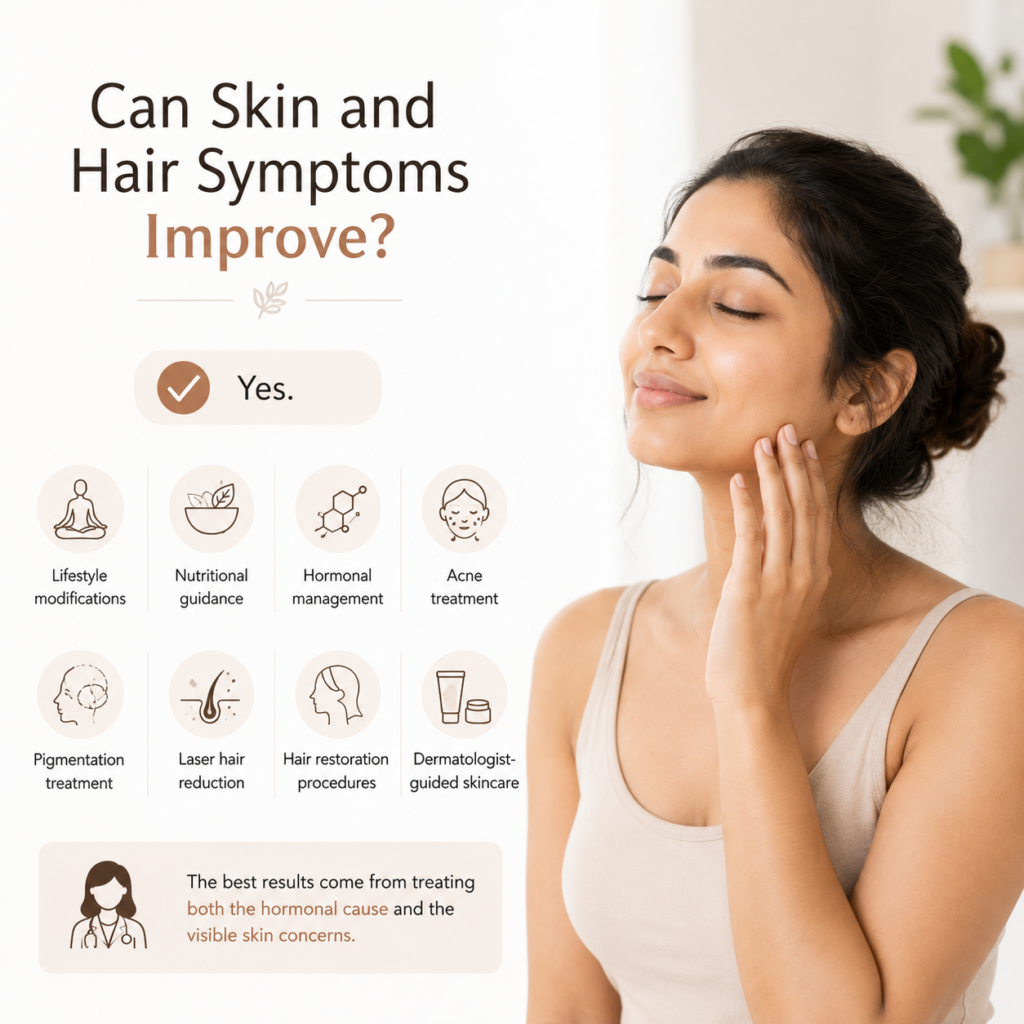
Can Skin and Hair Symptoms Improve?
YES.
When the underlying hormonal imbalance is managed effectively, many skin and hair symptoms can improve over time.
Treatment plans may include:
- Lifestyle modifications
- Nutritional guidance
- Hormonal management
- Acne treatment
- Pigmentation treatment
- Laser hair reduction
- Hair restoration procedures
- Dermatologist-guided skincare
The best results usually come from treating both the hormonal cause and the visible skin concerns simultaneously.
When Should You See a Dermatologist?
You should consider professional evaluation if you have:
- Persistent adult acne
- Sudden increase in facial hair
- Unexplained hair thinning
- Dark neck pigmentation
- Recurrent acne despite treatment
- Multiple skin symptoms occurring together
Early intervention often leads to better long-term outcomes.
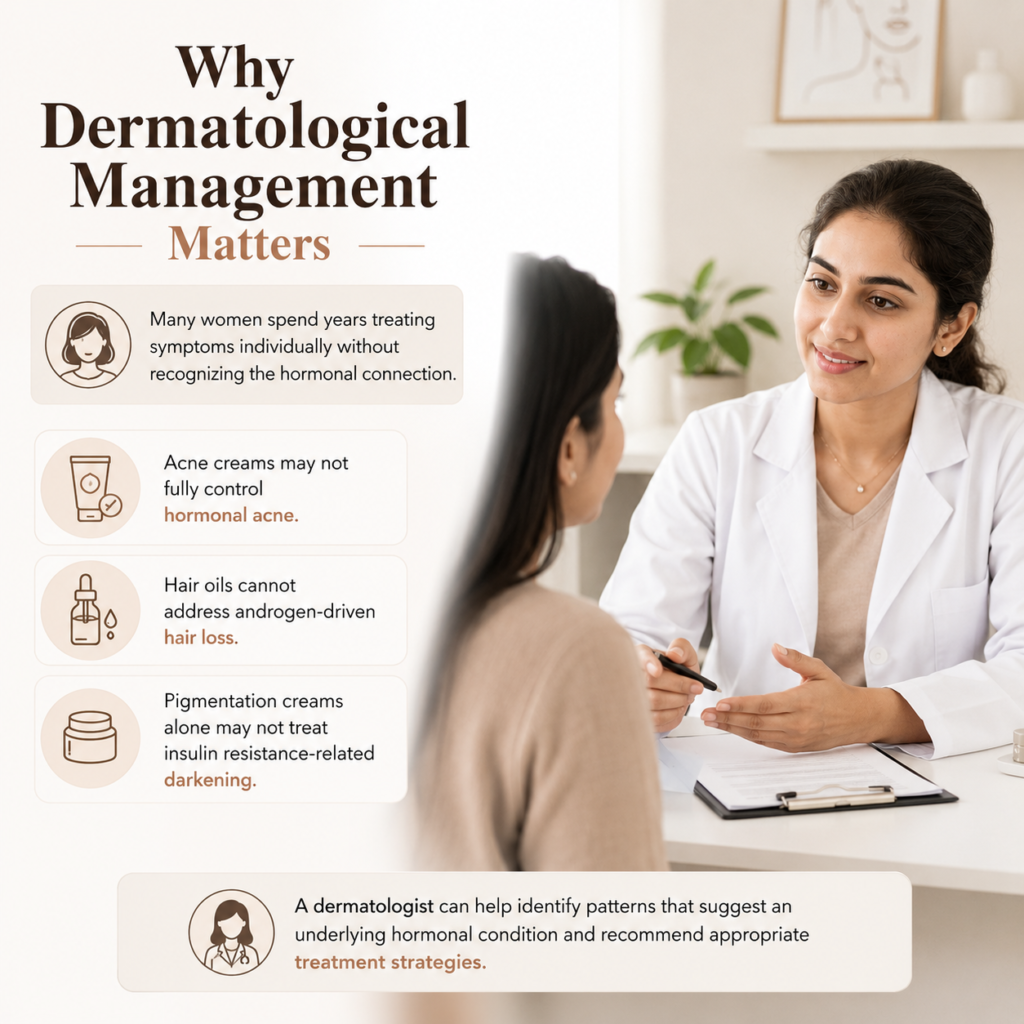
Why Dermatological Management Matters
Many women spend years treating symptoms individually without recognizing the hormonal connection.
For example:
- Acne creams may not fully control hormonal acne.
- Hair oils cannot address androgen-driven hair loss.
- Pigmentation creams alone may not treat insulin resistance-related darkening.
A dermatologist can help identify patterns that suggest an underlying hormonal condition and recommend appropriate treatment strategies.
Frequently Asked Questions
Which is more serious, PCOD or PCOS?
PCOS is generally considered a more complex hormonal and metabolic condition because it can affect multiple body systems and may increase long-term health risks.
Can PCOD cause acne?
Yes. Increased androgen levels can stimulate oil production and contribute to acne breakouts.
Does PCOS always cause hair fall?
Not always, but hair thinning and increased shedding are common symptoms.
Can PCOS pigmentation be treated?
Pigmentation can often be improved through a combination of medical management and dermatologist-guided skin treatments.
Will treating PCOS improve acne?
Many women notice improvement in acne when hormonal imbalances are managed appropriately.
Can laser hair removal help facial hair caused by PCOS?
Laser hair reduction can help manage unwanted hair growth, although ongoing hormonal management remains important.
Is every woman with acne likely to have PCOS?
No. Acne has many causes. However, persistent adult acne combined with irregular periods or hair changes may warrant further evaluation.